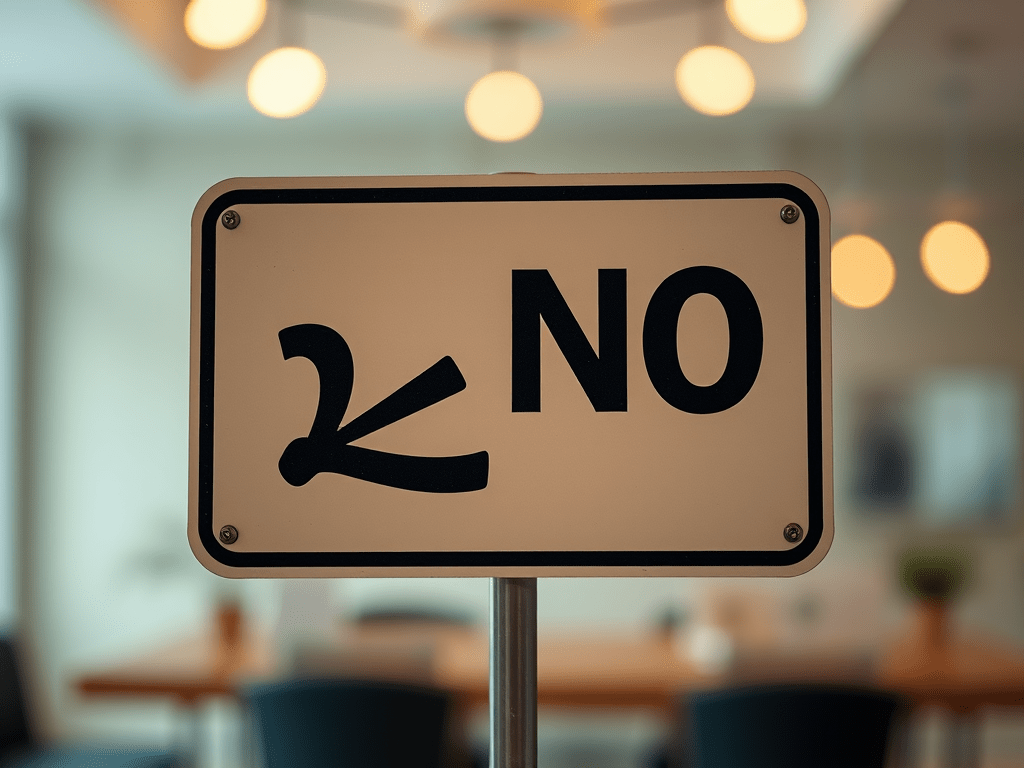
Why is it so hard to say no? That simple, two-letter word that could give you the space you need, the time you lack, and the energy to live your own life. For many of us, the inability to say no isn’t just a lack of confidence. It’s a deeply rooted habit, an invisible contract we signed long before we knew what it meant. Its roots are buried in our childhood, where “yes” became a synonym for acceptance and love.
This isn’t just another listicle. This is a manifesto that will show you how to break that contract by applying the principles of proactivity and personal responsibility.
1. The “Good Kid” Blueprint
The inability to say no begins with a deep-seated need for validation. As children, we learned very early that the approval of our parents, teachers, and peers came from being a “good” kid. The “good” kid is the one who doesn’t argue, who obeys, who always says “yes.”
A Childhood Memory: Remember the first time your mom asked you to clean your room when all you wanted to do was play? Or when your teacher asked you to volunteer for a project you didn’t want, but you said “yes” anyway to avoid disappointing them? That behavior gave us the temporary security of acceptance. But behind the love and praise lies the truth: we learned to trade our own needs for the validation of others.
Ask yourself: When do you first remember saying “yes” to something you didn’t truly want, just to earn approval?
2. The Chain Reaction of Adult Life
The “Yes” Autopilot
That “good kid” blueprint transfers directly into adulthood, creating a chain reaction that dictates our choices. When “no” is an alien word, “yes” becomes our autopilot.
In Your Career: We say “yes” to exhausting overtime, to a project we’re not interested in, or to an uncomfortable meeting because we’re afraid of criticism or losing our boss’s respect.
In Your Relationships: We say “yes” to requests from friends we don’t want to fulfill, just to avoid disappointing them. We say “yes” to an outing we’d rather skip, because “no” feels like a rejection of the person, not the proposal. This habit leads to relationships where we aren’t truly present and a life filled with simmering resentment.
In Your Personal Life: We say “yes” to things that drain us mentally and physically because we believe it’s our only option. We create a life where we have no time for ourselves, our hobbies, or our rest.
Ask yourself: What’s the most common situation in your life today where you say “yes” but you truly want to say “no”?
3. The Path to Freedom
The Principle of Proactive Refusal
Refusal isn’t a reaction; it’s a conscious choice. Freedom from the need for validation begins with understanding that “no” isn’t about rejecting someone else—it’s about affirming yourself.
Practical Steps:
- Recognize Your True Need: Before you say “yes” or “no” to a request, pause. Ask yourself: “Is this something I genuinely want?” “Does this choice serve my own goals and values?”
- Separate the Person from the Proposal: Your “no” isn’t an attack on the other person. It’s simply a response to their request. Saying, “No, I can’t help with that project, but I’d like to talk about what’s important for our team” is very different from a simple “no.”
- Start with Small “No’s”: You don’t have to change everything in a day. Start small. Say “no” to an annoying telemarketer’s call. Say “no” to an outing you don’t want to attend. Each small “no” is a victory that builds your self-confidence.
Ask yourself: What’s the first, small but decisive “no” you’ll say this week?
4. The Fears Behind “No”
The biggest challenge in saying “no” isn’t the word itself, but the fears hidden behind it.
Common Objections
- “They’ll get mad at me.” It’s possible some people will be initially upset. Their reaction, however, is not your responsibility. The fear of conflict holds you hostage. Give others time to get used to your new boundaries.
- “They will reject/abandon me.” This fear is perhaps the deepest, with roots in childhood. But a healthy person respects the boundaries of others. Those who walk away because you set boundaries aren’t people who truly had your well-being in mind.
- “I’ll feel guilty.” Guilt is a natural feeling, especially at the beginning. But recognize guilt as a sign that you are changing a deeply rooted behavioral pattern. It’s the guilt of change, not the guilt of a bad action.
The journey from “yes” to “no” is a journey from the need for validation to self-love. Go back to your childhood and recognize the beginning of the problem. Understand how that behavior affects your life today. And then, take the first step.
Don’t wait any longer. “No” isn’t a word to close a door; it’s the word that opens a new one, full of possibilities, for you.
 Cognitive Compass