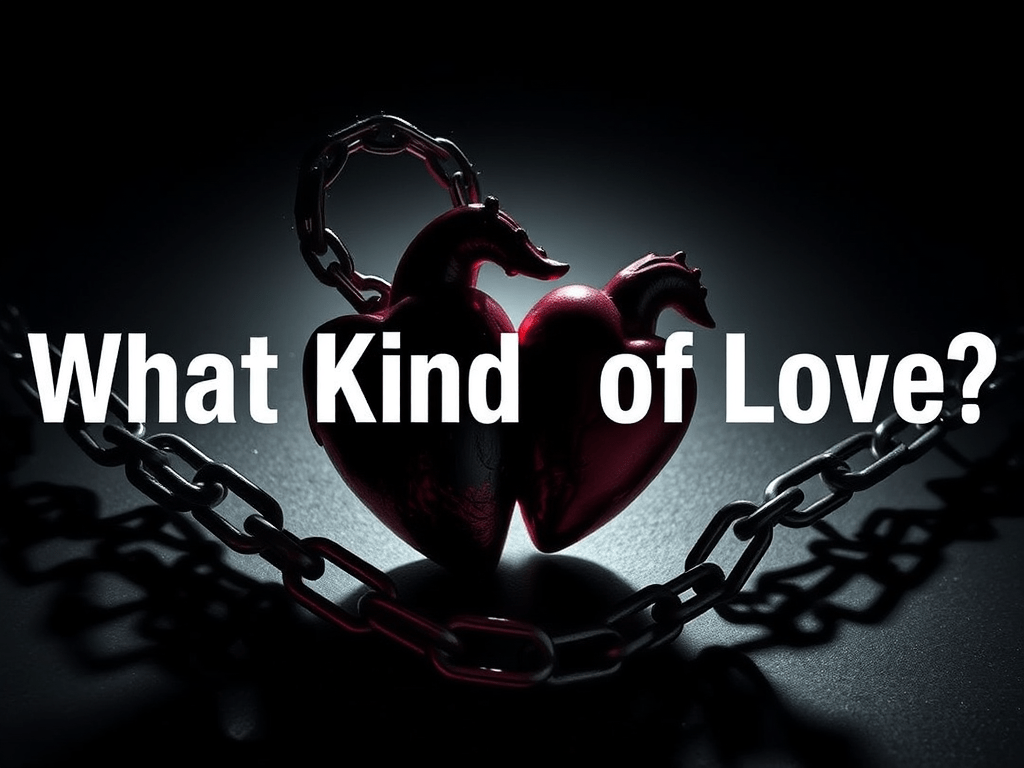
I hear the word “love” and my stomach ties into a knot. Consequently, I think about ordering a triple espresso. What love are we talking about, guys? What exactly do you mean? I wonder if all of this is just a staged necessity. Is it a mechanism built to validate our existence through the eyes of another? Or perhaps it is a non-stop demand for mirroring? Does “I love you” simply mean “I use you to see me”?
The Emotional Consumption of Others
Take the love of the insecure, for example. It is a hostage situation. However, the terror of abandonment isn’t just the fear of being alone. It is the complete inability to exist autonomously. While being “together” seems like the only way to avoid the void inside, they still call it love.
Then there is love fueled by jealousy. In this case, the focus isn’t on passion, instead, it is on ownership. Jealousy acts as resentment disguised as interest. It is control baptized as “caring.” Because of this sickly need to shrink the other person’s vital space, an interrogation room is created. Every smile to a third party feels like betrayal. Meanwhile, every hour of freedom feels like a threat. And yet, they call it love.
The Ghosts and the Cages
Consider ghost-love as another variation. These people live together while their desire has already moved elsewhere. Even though they convince themselves they “love each other,” they actually seek redemption in foreign bodies. They want new experiences to make them feel alive again. As a result, “love” becomes the dungeon of desire. They cohabitate with their boredom just to avoid the end because the cost of breaking up seems heavier than their shared misery.
Furthermore, there is “impact-love.” This is where bruising is considered a badge of interest. In these dark corners, brutality is baptized as a “fateful relationship.”
Parental love is another sweet confusion. Specifically, “I’m looking out for you” often means “I’m controlling you.” It is the art of building a warm nest that ultimately becomes a cage. Parents expect gratitude for this protection, yet they never let the bird learn how to fly on its own.
The Self-Love Trap
Then comes my favorite part: Self-Love. This is where I need a calming pill. After society and toxic lovers suck you dry, they suggest you lock yourself in a glass jar. They call it “evolution.” Instead of fixing how we relate, they teach us to need no one. People with stupid smiles and Instagram quotes tell you the solution. Specifically, they say your loneliness ends by admiring yourself in the mirror.
However, it isn’t heroic to need no one. In reality, it is a social disability baptized as “growth.” We rarely talk about problematic relationships or the silence that suffocated us. Similarly, we don’t admit we failed to ask for help when the ship was sinking. Instead, they sell us the “autonomous hero.” They tell you you’re great because you made it alone, but honestly, what did you prove?
“Nobody is coming to save you,” they say. Yes, they aren’t coming because your relationships were contracts of silence. You didn’t speak up, nor did you ask for help. Now they brand this disability as “heroism.” It’s a fairy tale that whispers you don’t need anyone. In truth, you tremble because you realize a mirror cannot hold your hand. If love is inside us, why search for it outside? Our “self” simply cannot hold our hand when we shake.
The Space Between Us
If we removed this word from the dictionary, what would be left? A naked, raw deficiency would remain. It is a hunger that starts at birth and never stops. We crave it because we fear the void of its absence. Perhaps then we could simply exist. We could live without the drama of “forever” or the anxiety of “how much.”
Maybe we could stand across from the other without wanting to “fix” them. We wouldn’t ask them to answer our own shortcomings. Instead, we would recognize the other as an autonomous unit, not a supplement. Love, as we were taught, is deeply selfish. It is a “want” disguised as an “offering.” Ultimately, it is a transaction where the other validates us.
Love is measured by the space given for individuality to bloom. It is when you stand next to someone and want to change nothing. Consequently, the word “love” stops being a burden and becomes a space where you exist freely. You give care because you are overflowing, not to fill your own holes.
The Final Realization
So, look at the person across from you. Strip away everything they “provide.” Remove the security and the validation. In addition, remove the escape from loneliness. What remains? If it is just a role filling your gaps, keep calling it love. But if what remains is a human being who owes you nothing, then maybe you’ve just begun to love them.
 Cognitive Compass
You don’t have to agree, express yourself freely!